
Indigenous undersea autonomy
Autonomous systems that turn depth, distance and denial into operational advantage.
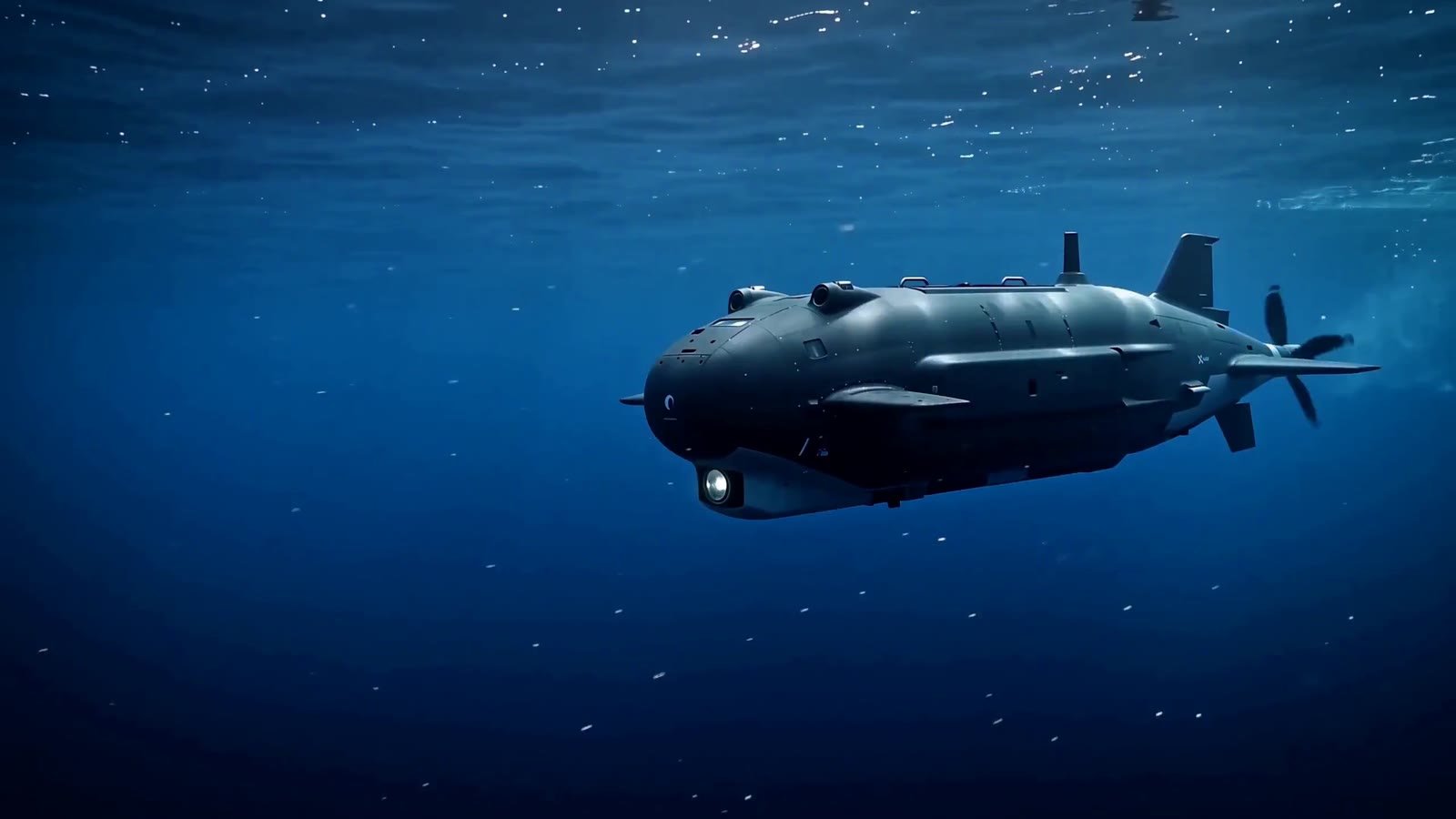
Xsub Robotics builds indigenous extra-large unmanned underwater vehicles for persistent maritime operations — undersea presence sustained where manned and remotely piloted platforms cannot go.
XLUUV — 12 m class · autonomous underwater mothership · TRL-4
The programme
One platform. Built to stay out.
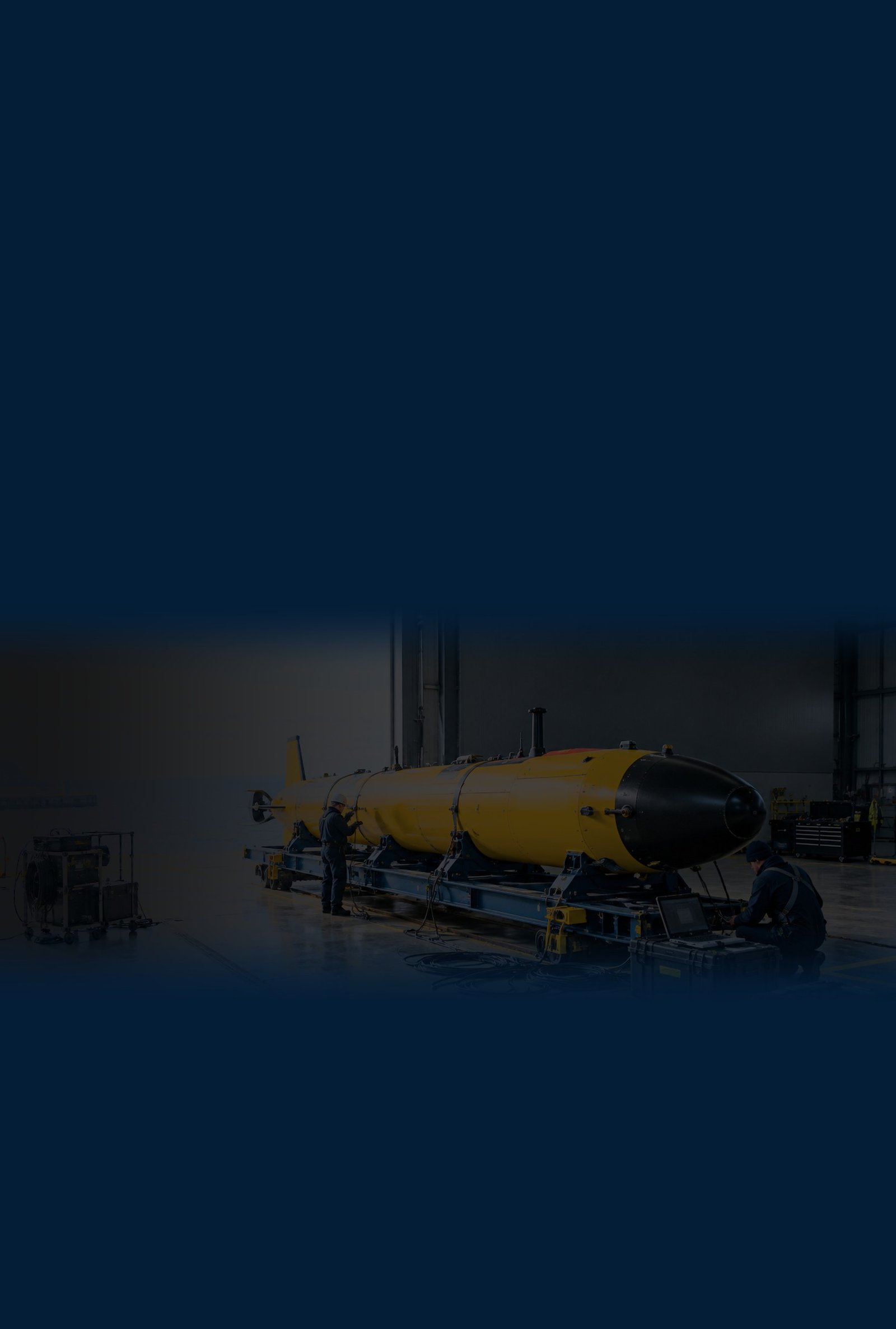
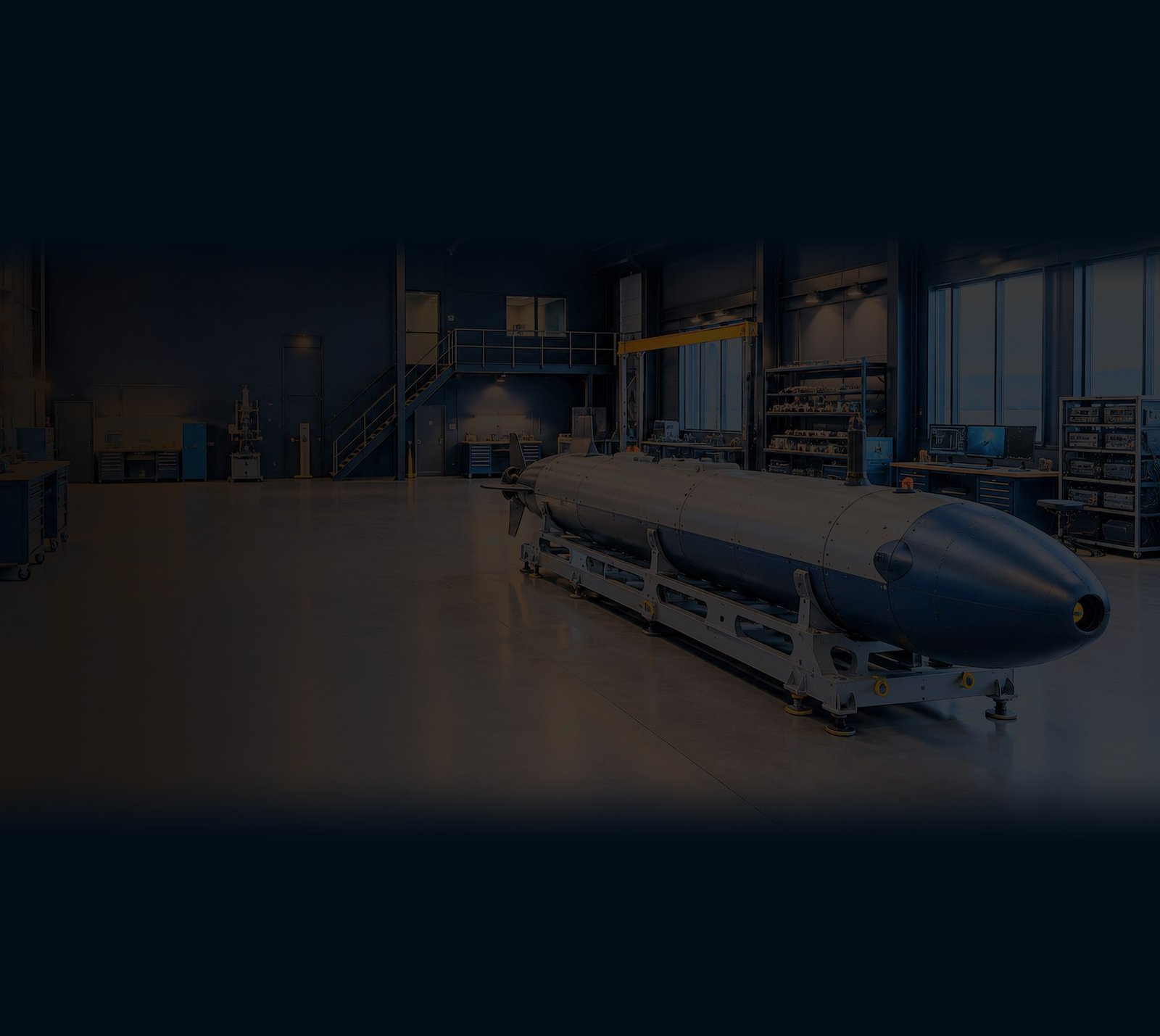
A 12 m-class extra-large unmanned underwater vehicle, designed as a modular underwater mothership able to transport, deploy and coordinate multiple autonomous mission assets over extended ranges.
Persistent maritime ISR
Pre-deployment reconnaissance and MCM support
Distributed underwater networks
The requirement
Presence is the hard part.
Maintaining continuous underwater awareness over weeks — not hours — is where existing options run out.
Manned platforms are expensive, finite and carry people into risk. Smaller autonomous vehicles are constrained by onboard energy and need frequent recovery. Between them sits a gap: sustained underwater presence, carrying meaningful sensor payloads, across a large maritime area, without exposing a crew or a high-value asset.
That gap is what the XLUUV is built to close. It is designed to augment existing naval capability rather than replace it — extending reach, persistence and coverage as a scalable unmanned layer.
The strategic case is not speculative. Major naval powers are actively fielding or developing vehicles in this class, and Indian programmes under the Make, NIIO and iDEX frameworks point clearly toward indigenous unmanned platforms with long-endurance ISR and mine-countermeasure capability.
Why we can build it
Every discipline sits inside the ownership structure.
Naval architecture, robotics and autonomy, and defence-grade fabrication are not procured from vendors. They are held by the companies that own Xsub.
- KDAIL Defence Manufacturing
- Planys Underwater Robotics & Autonomy
- Conceptia Naval Architecture & Engineering Design
- Xsub Robotics One engineering organisation
A typical undersea programme crosses three or four commercial boundaries before a working platform exists, and every handoff is a place where schedule, quality or accountability can break down. Xsub was assembled to remove those boundaries rather than manage them. Responsibility for the vehicle does not change hands.
Engineering basis
Design, simulate, prototype, validate, manufacture.
11 engineering disciplines held within the organisation, working to one development cycle.
Design & Engineering
- Structural & Pressure Hull Engineering
- Hydrodynamics & Propulsion
- Electrical & Power Systems
- Systems Engineering & Integration
- Materials Engineering
Autonomy, Sensing & Intelligence
- Navigation & Autonomy
- Artificial Intelligence & Machine Learning
- Perception & Sensor Fusion
- Mission Software & Payload Systems
Manufacturing & Validation
- Precision Fabrication
- Lab, Tank & Open-Water Trials
Let's talk
Let's discuss if our mission resonates with you.
Whether you are assessing a platform, a partnership or a programme, we start with the requirement.